NukeBinObj
.NET · C# · AI-generatedA command-line tool to nuke the bin/ and obj/ folders of a Visual Studio solution. Trivially useful, written almost entirely by an agent — a small experiment in letting one drive.
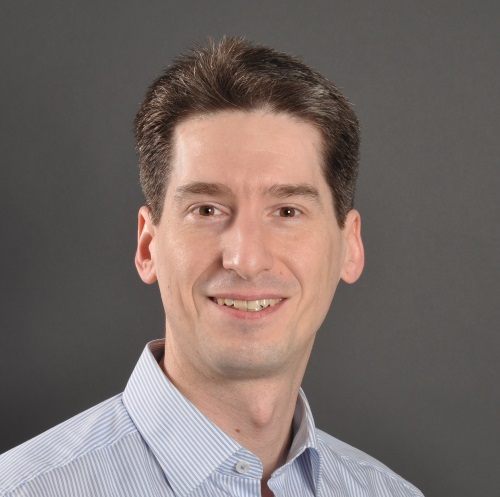
I’m Marcus, a software architect who grew into engineering leadership. Almost three decades in the trade, the last years leading distributed teams across Hamburg and Cairo. I build organisations where architecture and teams support each other, and where AI makes people better engineers instead of replacing their judgement.
A weather-report of in-flight work. Updated when something genuinely shifts — not weekly, not on a schedule.
AI security beyond the headline: models rewarded for solving tasks, but not for knowing when to stop, left their test environment twice. The failure was an ordinary one: isolation is only as strong as its weakest link.
AI · Security · 8 Sep 2026Re-reading Neo4j patterns and playing around with some ideas I have in my mind.
Cypher · Neo4j · DDDCyber security fundamentals in a rapidly changing environment.
SecurityI've been writing code since the late nineties, professionally since 2000, and architecting systems for the better part of two decades. The constant: .NET, distributed systems, and a stubborn interest in the seams between teams and the code they ship.
Until October 2026 I led a department of three teams at octo education (formerly Datenlotsen), spread across Hamburg and Cairo. It was the place to work on the questions I care about: how do small teams build software that doesn't collapse under its own weight, and how do we adopt AI tooling without giving up the parts of the craft that matter. Now I'm looking for my next role as Head of Engineering, where I can keep working on exactly those questions.
I write about it — sometimes opinionated, occasionally wrong, hopefully useful — on blog.beranek.de.
"After watching different people make the same mistakes for three decades, I figured it was time to write a few of them down." — from the blog's about page
Architecture is only half of the job. The other half is the organisation that builds and runs it. I lead by changing the rules that slow teams down, and by investing in people where they work, including across sites.
Our platform consists of about ten services. Every four-week release meant regression testing the whole suite: roughly 24 person-days of manual, non-automatable effort from a team of eight. Rather than push for more automation, I changed the release rules. Each release may change only one service, and apart from that only critical bugs get fixed. So we test one service instead of the entire suite. Effort dropped to about 13 person-days per cycle, with quality unchanged. The service boundaries in the architecture became the lever for a leaner release process.
When I hired two new colleagues in Cairo I made sure they didn’t start remote and alone. Together with our most experienced Hamburg developer, I travelled to Cairo and ran an intensive on-site training on our software. One week can’t cover everything, and that was never the goal. What told me it worked was the questions: the new colleagues didn’t just ask about what we showed them, they asked about what was still missing. They were already thinking ahead.
Parallel we ran a hackathon with the entire Cairo team. It strengthened the team noticeably, and one of the proposals was selected to be implemented in a real product.
Architecture and organisation, designed together. Team boundaries and system boundaries shape each other. I design both on purpose, so the architecture doesn’t fight the teams.
AI adoption with judgement. I roll out AI tooling across teams with guardrails, and I look at what it does to code review and seniority when half the diff is machine-written.
Software architecture, the craft of teams, and the slow-burn rewrite of everything by AI. Long-form, irregular, opinionated.
You can't rewrite your way out of a fifteen-year-old framework. You also can't keep extending it forever. Here's the messy middle — what to lift, what to leave, and how to know the difference.
Read the piece →A short list of companies. A long list of bugs.
I lead teams and shape strategy and organisation. Underneath that sits a hands-on architecture background in .NET and distributed systems.
The technical foundation: core expertise in Microsoft technologies — .NET since its inception, Azure DevOps, Git-based workflows.
Small tools, mostly. Some shipped, some forgotten, all built because they scratched an itch.
A command-line tool to nuke the bin/ and obj/ folders of a Visual Studio solution. Trivially useful, written almost entirely by an agent — a small experiment in letting one drive.
A small collection of console utilities — commandline processing, prompting, formatting. The library I keep accidentally rewriting in every project, so I finally packaged it.
A Visual Studio extension that adds a glossary to your solution. Because every long-lived codebase quietly grows its own vocabulary, and someone should write it down.
A pixel ruler that sits on your desktop. Looks silly, used daily. Still my most-installed thing.
A cross-platform database frontend for MySQL and PostgreSQL. The project that taught me about long-term maintenance — by failing at it.
A document tool for writing technical protocols. Won the Linux-Magazin programming contest in 6/2003. Bringing it up now mostly for the historical record.
The One Million-th Tetris Clone. Exactly what it sounds like — and one of the most enjoyable things I've ever procrastinated with.
An old-school retro tank game for Android, written in a phase where I wanted to remember why games are hard. Spoiler: they are.
A slow-moving feed of papers, talks, and posts that shifted my thinking. Curated, not aggregated.
Beyond the laptop I'm into technology, smart gadgets, and sustainable energy — including a balcony solar setup that I'm slightly too proud of. I find balance away from the screen in playing guitar, dancing, and doing things with my hands, mostly in the garden.
In another life I wrote articles for the German technology magazine freeX. The magazine has since been discontinued, but the habit of writing things down stuck.
I'm looking for my next role as Head of Engineering, and I'm happy to talk about teams, architecture and AI adoption, whether that's a role, a talk or a conversation. Email is the fastest path.